How Understanding It Changed the Decisions I Stopped Making
When I first started working with organic traffic, I made a quiet but expensive mistake.
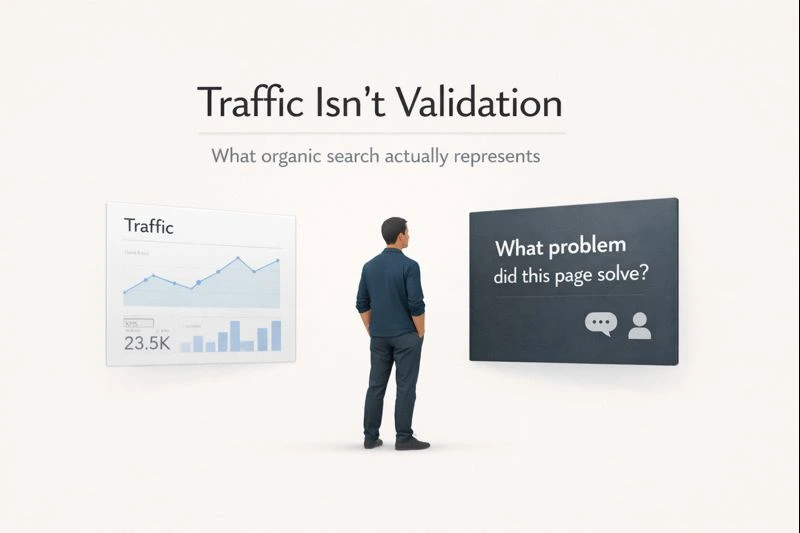
I treated traffic as validation.
If numbers went up, I assumed I was doing the right thing. If they went down, I assumed something was broken. That way of thinking led me to publish the wrong content, chase the wrong topics, and kill pages that were actually doing their job.
That assumption didn’t just cost me time.
It cost me clarity.
Understanding what organic search traffic really represents changed how I decide what to publish, what to ignore, and what not to panic over.
- What Organic Search Traffic Actually Represents (Not Just Where It Comes From)
- Organic Traffic vs Other Traffic Types (The Decision Impact)
- Why I Stopped Judging Organic Traffic by Volume
- How I Look at Organic Traffic in Google Analytics (Interpretation First)
- Why Organic Traffic Grows Slowly (And Why That’s a Feature)
- Search Intent: Where Most People Sabotage Their Own Pages
- Why Organic Traffic Declines (The Causes People Miss)
- How Understanding Organic Traffic Changed My Strategy
- When Organic Traffic Is the Wrong Priority
- Final Perspective
What Organic Search Traffic Actually Represents (Not Just Where It Comes From)
At a technical level, organic search traffic is simple. It’s visits that come from unpaid search results on Google, Bing, and other search engines.
Strategically, it’s something else entirely.
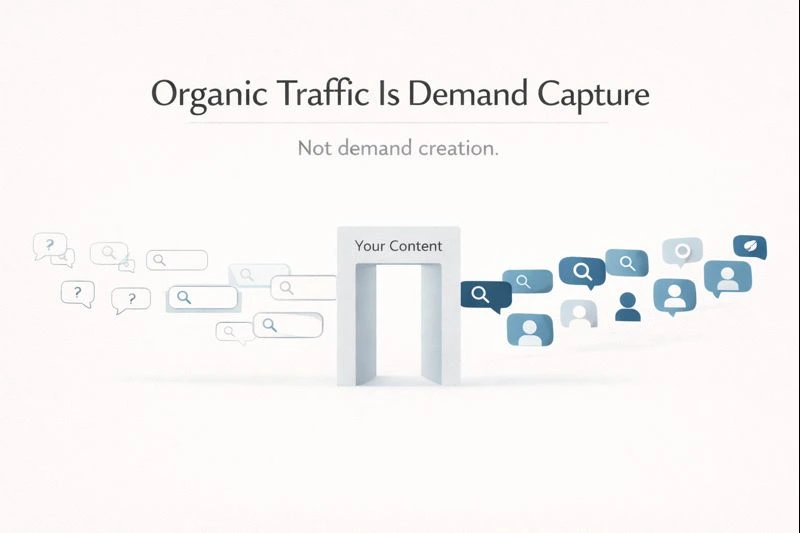
Organic search traffic is demand capture, not demand creation.
It reflects:
- What people are already trying to solve
- How they phrase their problems
- What they believe will help them
This is why organic traffic behaves differently from ads or social. You’re not persuading someone to care. You’re intercepting existing intent.
Once I understood that, I stopped treating SEO like advertising and started treating it like market intelligence.
Organic Traffic vs Other Traffic Types (The Decision Impact)
Most explanations list traffic types. That’s not very useful.
What matters is what each type tells you.
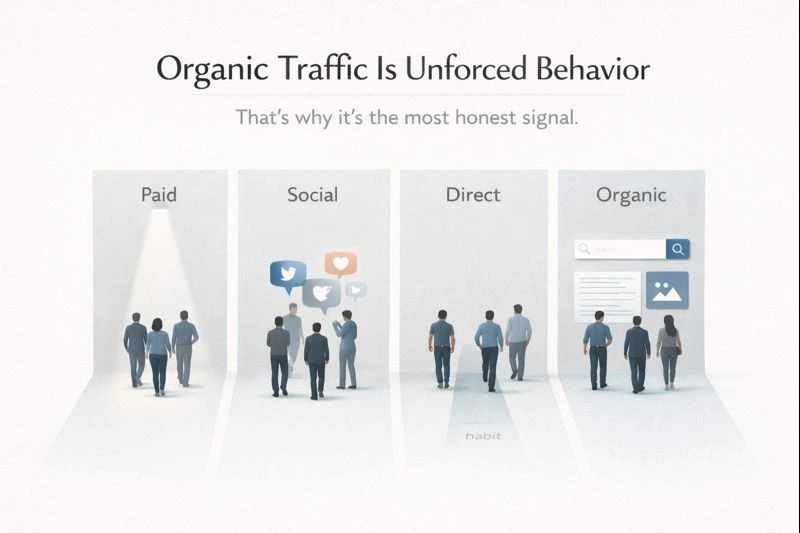
- Paid traffic shows what works when you push visibility.
- Social traffic shows what resonates emotionally in the moment.
- Direct traffic reflects memory, habit, or attribution gaps.
- Organic traffic shows what users choose when no one nudges them.
That last part is critical.
Organic traffic reveals unforced behavior. It tells you what people want without persuasion. That makes it one of the most honest signals you can get.
Why I Stopped Judging Organic Traffic by Volume
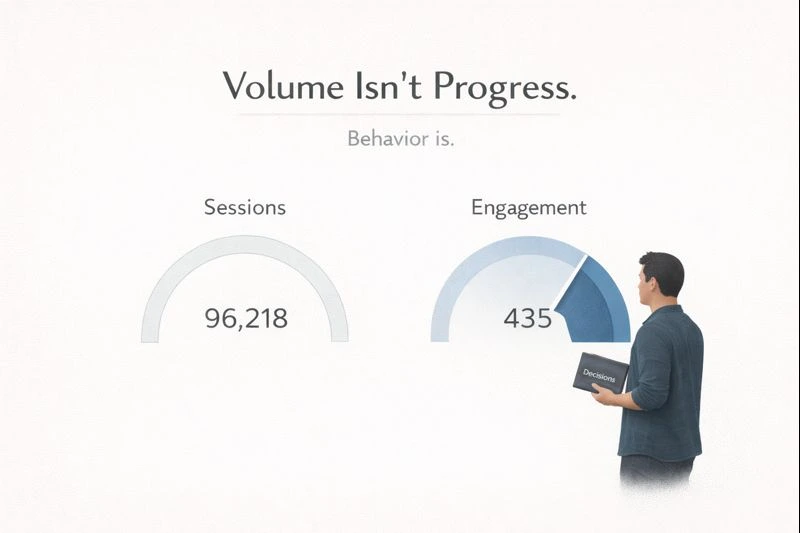
Early on, I made another mistake. I treated organic traffic volume as the scorecard.
More sessions felt like progress. Fewer sessions felt like failure.
What I learned instead is this:
- Sessions without engagement are a warning, not a win.
- Traffic that doesn’t move deeper tells you something upstream is wrong.
- Volume without behavior is noise.
Now, I don’t panic over traffic drops unless engagement degrades. And I don’t celebrate traffic increases unless downstream behavior improves.
That shift alone stopped me from making impulsive changes.
How I Look at Organic Traffic in Google Analytics (Interpretation First)
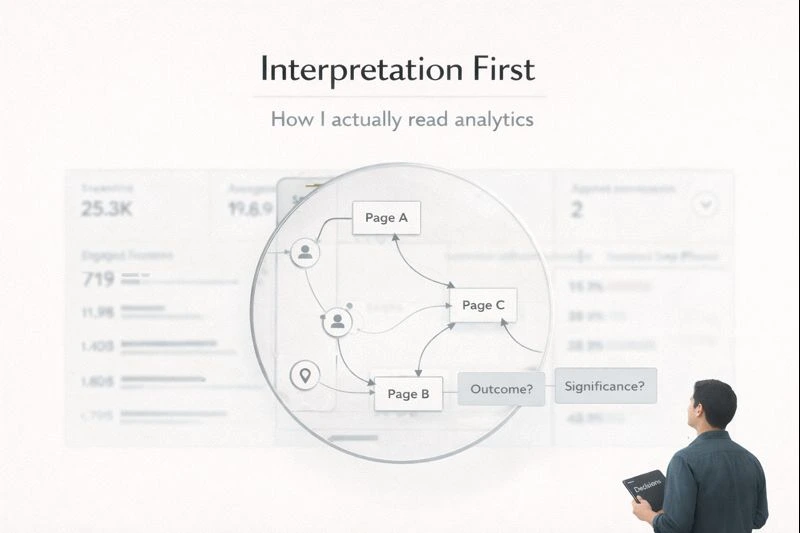
I still use Google Analytics, but not as a dashboard to admire or fear.
When I check organic traffic, I focus on:
- Engaged sessions
- Average engagement time
- Page-to-page movement
- Assisted conversions
What I’m really asking is:
“Did this page attract the right visitor?”
Analytics doesn’t answer strategy questions. It confirms whether the strategy was sound in the first place.
Why Organic Traffic Grows Slowly (And Why That’s a Feature)
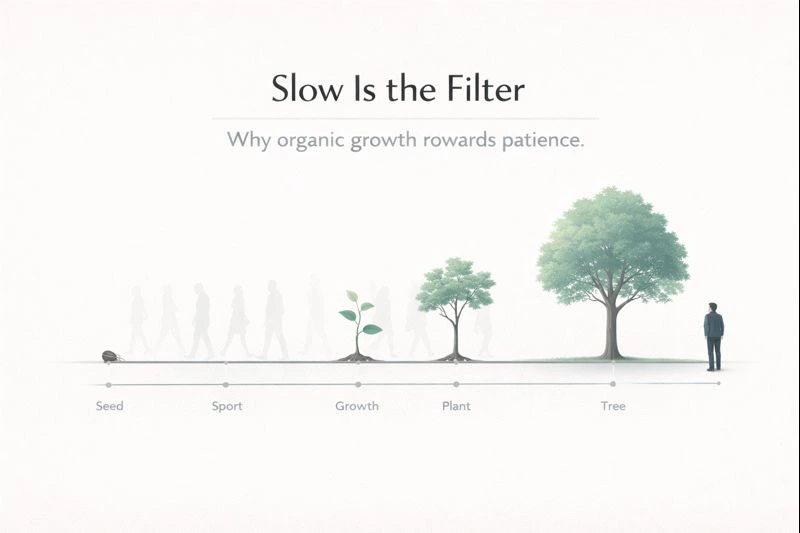
Organic traffic is slow because it’s selective.
It doesn’t reward:
- Impatience
- Volume publishing
- Shallow coverage
It rewards:
- Alignment
- Consistency
- Relevance over time
The uncomfortable truth is that slow growth filters out people who expect instant feedback. Most sites don’t fail because SEO doesn’t work. They fail because the operators quit during the flat line.
Early organic traffic is not a reward.
It’s a signal.
Search Intent: Where Most People Sabotage Their Own Pages
Search intent isn’t just an SEO concept. It’s expectation management.
I’ve seen pages fail because:
- Informational pages were judged by revenue
- Commercial pages were overloaded with education
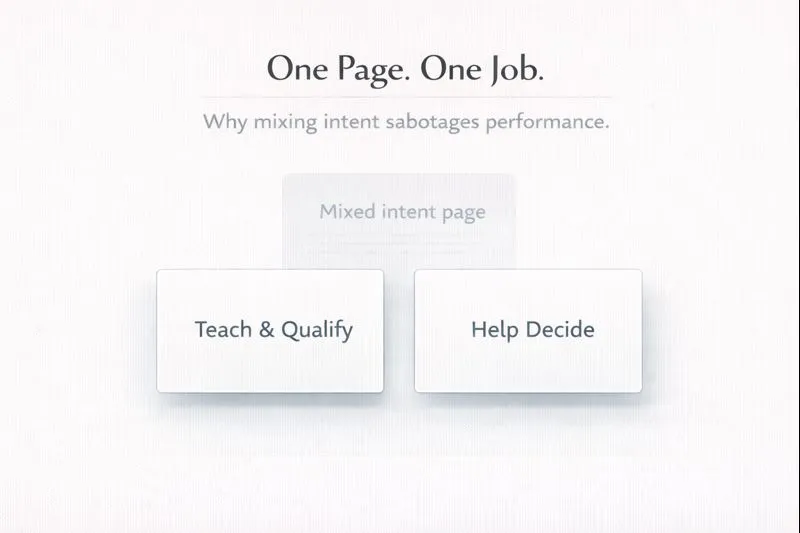
- Mixed intent confused both users and search engines
Now I’m strict:
- Informational pages exist to teach and qualify.
- Commercial pages exist to help people decide.
- One page does not do both well.
Once I separated those roles, both rankings and conversions improved.
Why Organic Traffic Declines (The Causes People Miss)
Most explanations focus on obvious reasons: updates, competition, stale content.
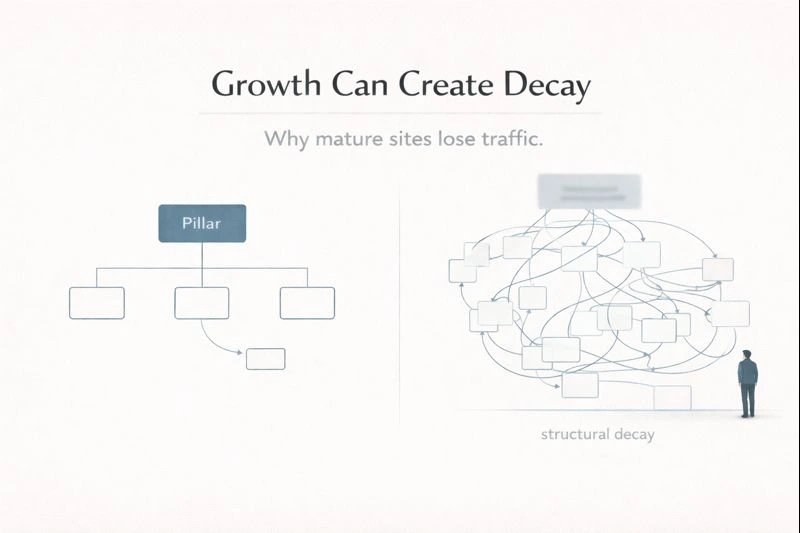
There’s another cause that shows up as sites grow:
- Structural decay
As sites expand:
- Topics overlap
- URLs compete
- Internal hierarchy weakens
- Cannibalization becomes accidental
Organic traffic doesn’t always drop because content got worse. Sometimes it drops because the site outgrew its original structure and never adapted.
That’s a maturity problem, not a beginner mistake.
How Understanding Organic Traffic Changed My Strategy
This is the biggest shift I made.
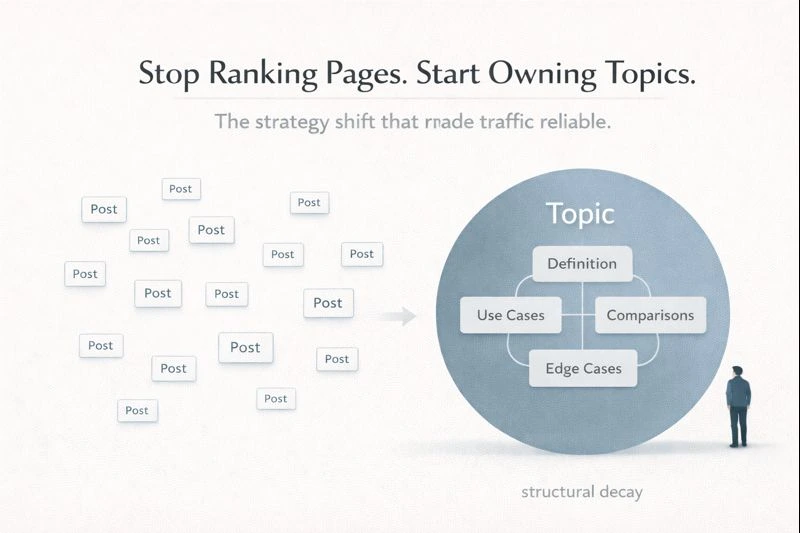
I stopped thinking in terms of “ranking pages” and started thinking in terms of owning topics.
That meant:
- Fewer pages, better aligned
- Clearer internal paths
- Less obsession with individual keywords
- More focus on predictability
Organic traffic became quieter, but more reliable.
When Organic Traffic Is the Wrong Priority
This is important to say.
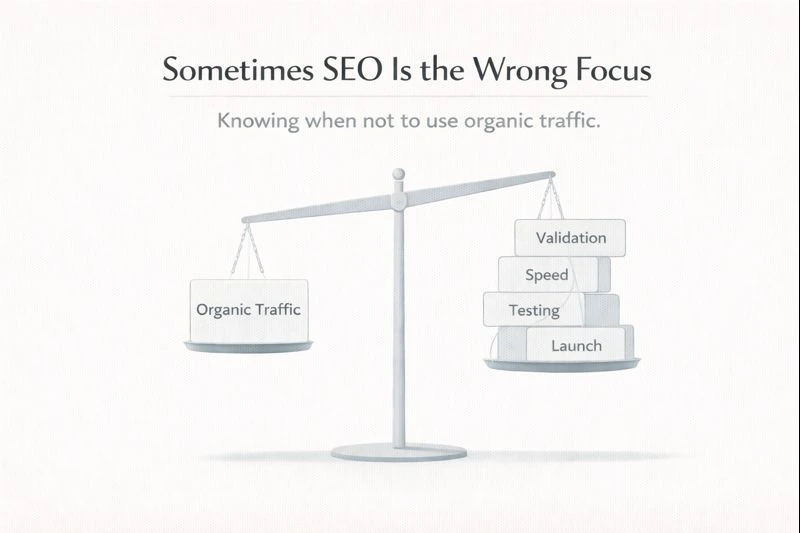
Organic traffic is not always the right focus when:
- You’re validating a brand-new idea
- Demand doesn’t exist yet
- You’re running time-sensitive campaigns
- You need immediate feedback
In those cases, organic traffic won’t save you. It will lag.
Knowing when not to prioritize organic traffic is part of using it correctly.
Final Perspective
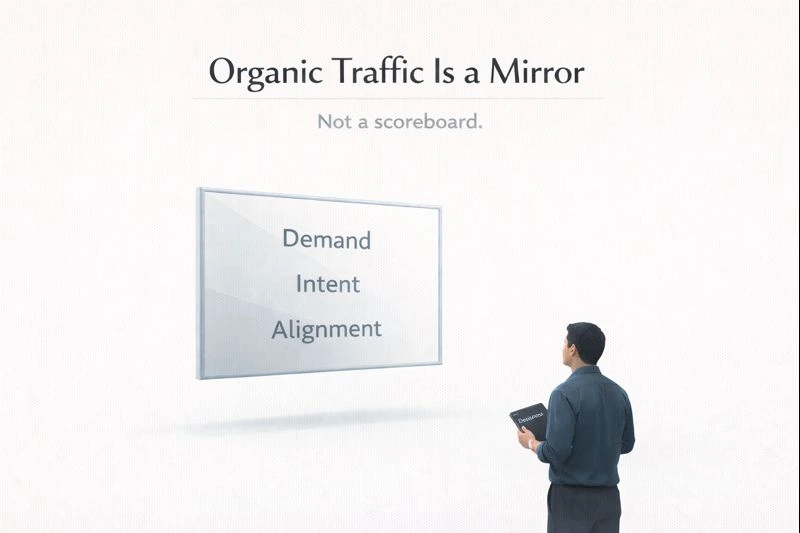
Organic search traffic isn’t just a channel. It’s a mirror.
It reflects:
- Demand reality
- Intent clarity
- Strategic alignment
When I stopped using it as validation and started using it as feedback, my decisions improved. Fewer panic edits. Fewer abandoned pages. More consistency.
Organic traffic doesn’t reward effort.
It rewards understanding.