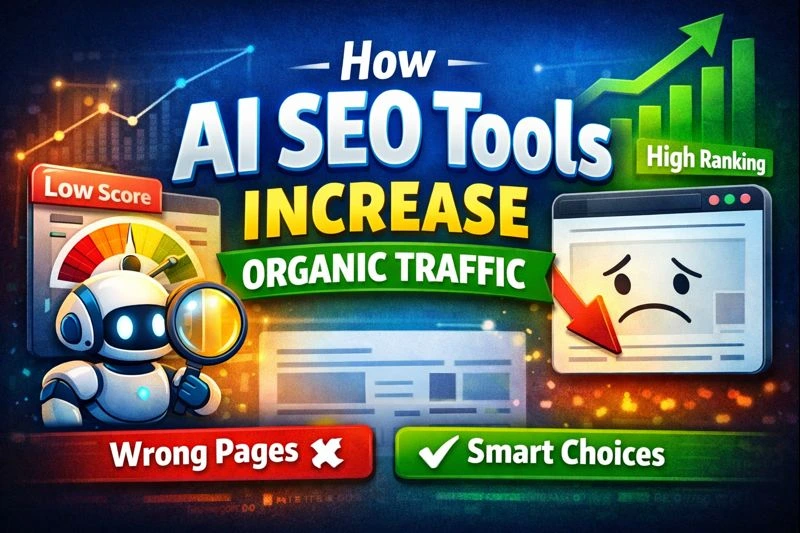
Most people using AI SEO tools are optimizing the wrong pages.
That’s not an exaggeration. It’s the pattern I keep seeing. Pages get scored, rewritten, expanded, and “optimized” endlessly, yet they never move past page two. Not because the tools are broken, but because interpretation is.
AI search optimization tools don’t fail loudly. They fail quietly. They make you feel productive while reinforcing the wrong assumptions if you don’t know what to look for.
This article explains how AI search optimization tools actually increase organic traffic when used correctly, what changes in practice, and where they quietly do more harm than good.
- What AI Search Optimization Tools Actually Do
- Keyword & Topic Selection: Where Most People Burn Time
- Why Content Structure Changes Rankings
- Forecasting Organic Traffic: Why This Is Really About Risk Management
- Early Warning Signals I Watch Before Traffic Drops
- Where AI Search Optimization Tools Consistently Fail
- The Framework I Use
- Where AI Falls Short
- One Book That Helped Me Think Beyond Tools
- The Uncomfortable Truth About AI SEO Tools
- Final Perspective
What AI Search Optimization Tools Actually Do
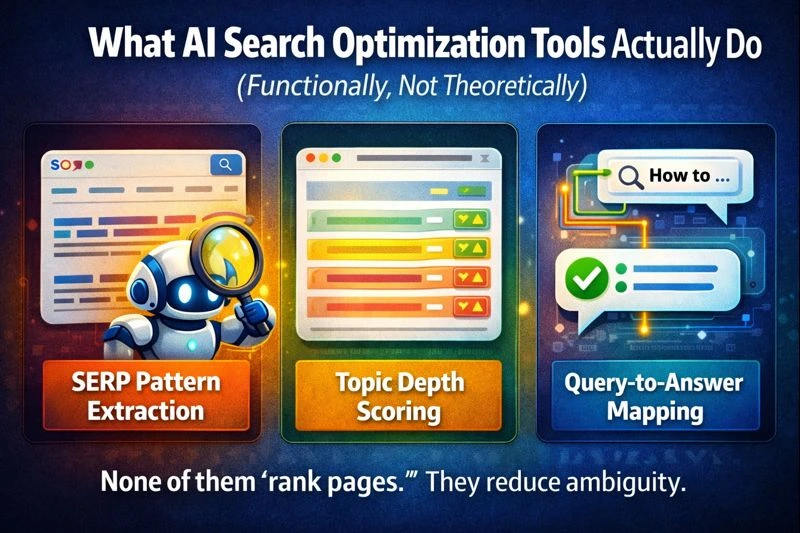
AI SEO tools are often grouped together as if they all do the same thing. They don’t.
In practice, I’ve seen clear functional differences:
- Some tools excel at SERP pattern extraction, identifying how top-ranking pages structure answers.
- Others focus on topic depth scoring, highlighting subtopics that Google appears to reward.
- Some are strongest at query-to-answer mapping, helping align content with search intent instead of keywords.
None of them “rank pages.”
They reduce ambiguity.
That distinction matters, because organic traffic growth is rarely blocked by effort. It’s blocked by uncertainty about what actually matters.

Keyword & Topic Selection: Where Most People Burn Time
Here’s a contrast I’ve seen repeatedly.
A high-volume keyword, well optimized, well written, never breaks page two.
A lower-volume, intent-aligned topic:
- Ranks faster
- Attracts more engaged readers
- Pulls internal links naturally
- Outperforms expectations over time
The difference is not volume. It’s problem clarity.
AI tools help here by exposing:
- Overlapping intent
- Hidden subtopics
- Query variations that signal readiness vs curiosity
But they don’t make the decision for you. They surface options. You still have to choose the right problem to solve.

Why Content Structure Changes Rankings
When people talk about AI-assisted content structure, they usually mention outcomes:
- Better engagement
- Featured snippets
- Higher rankings
The mechanism is simpler.
Search engines don’t just read content. They classify it.
Clear structure:
- Reduces ambiguity about what a page is “about”
- Signals topical completeness
- Helps crawlers connect related concepts without guesswork
When key subtopics are missing, the page looks incomplete even if it’s long.
When structure is bloated, the page looks unfocused even if it’s thorough.
AI tools help identify these gaps, but only if you’re willing to remove content as often as you add it.

Forecasting Organic Traffic: Why This Is Really About Risk Management
This is one of the most misunderstood benefits of AI SEO tools.
Most people think forecasting is about growth.
In reality, it’s about protection.
Used properly, AI-assisted forecasting helps:
- Detect declining interest before traffic drops
- Identify intent shifts early
- Flag pages at risk of silent decay
Silent decay is the most dangerous kind. Rankings don’t crash. Traffic just erodes.
AI tools don’t predict the future. They reduce reaction time, which is often the difference between recovery and replacement by competitors.
Early Warning Signals I Watch Before Traffic Drops
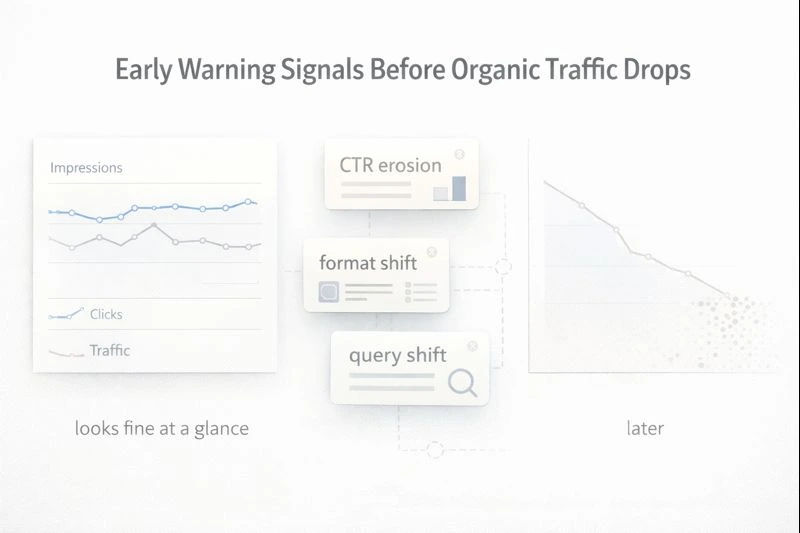
Before organic traffic drops in analytics, I usually see one or more of these signals:
- Stable impressions, declining clicks
- CTR erosion due to SERP feature changes
- Competitors changing content format
- Search queries becoming more specific or more commercial
When people wait for traffic to drop before acting, they’re already late.
This is where AI tools function best, not as growth engines, but as early warning systems.
Where AI Search Optimization Tools Consistently Fail
This is where I stop being polite.
AI tools fail when users:
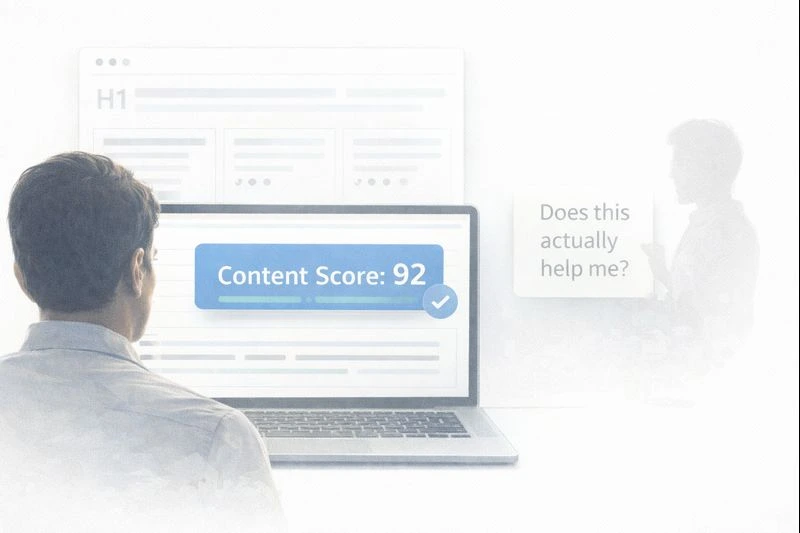
- Blindly follow content scores
- Optimize pages that shouldn’t exist
- Write to the tool instead of the reader
- Confuse correlation with causation
A page scoring “90+” doesn’t mean it deserves to rank.
It means it resembles other pages that rank.
That distinction matters more than most people want to admit.
The Framework I Use
Here’s the process I follow:
- Identify the real problem behind the query
- Use AI tools to surface SERP patterns and subtopics
- Decide whether the topic is even worth targeting
- Build content aligned with dominant intent
- Optimize structure for clarity, not completeness
- Monitor impressions before traffic
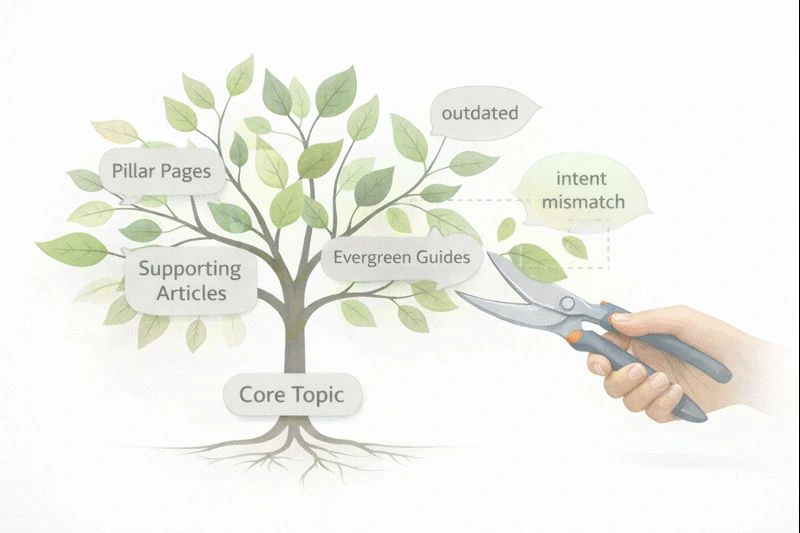
- Kill or merge pages that no longer match intent
That last step is the one most people avoid.
Keeping outdated or misaligned pages “because they rank a little” often suppresses stronger content elsewhere.
Organic traffic growth sometimes requires subtraction.
Where AI Falls Short
AI tools cannot:
- Understand emotional context fully
- Judge business relevance
- Decide strategic priorities
- Replace judgment
They accelerate thinking. They don’t replace it.
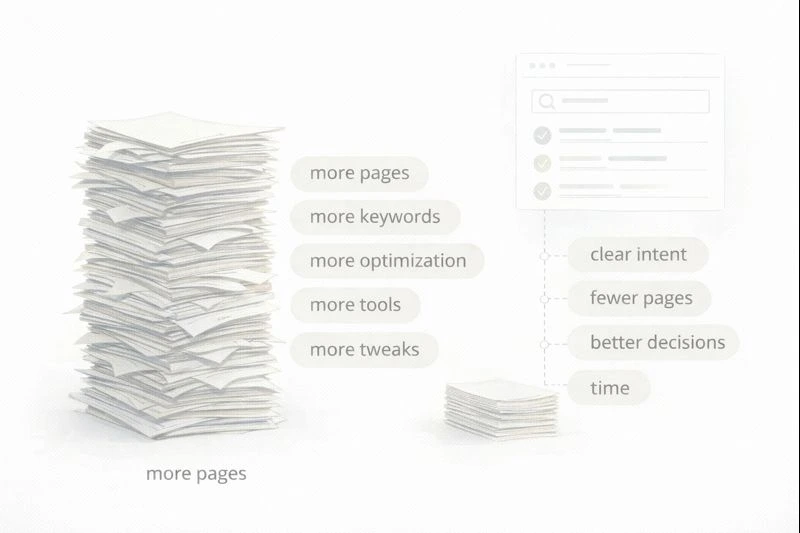
Most people don’t need more tools.
They need fewer assumptions.
One Book That Helped Me Think Beyond Tools
📘 “Good Strategy / Bad Strategy” by Richard Rumelt
It’s not an SEO book. That’s why it’s valuable.
It teaches how to:
- Diagnose real problems
- Avoid superficial fixes
- Focus effort where it actually compounds
That mindset applies directly to organic traffic.
The Uncomfortable Truth About AI SEO Tools
Most people don’t need more optimization.
They need:
- Fewer pages
- Clearer intent
- Better decisions
- Longer execution windows
AI tools can help with all of that, but only if you stop treating them as ranking engines and start treating them as decision support systems.
Final Perspective
AI search optimization tools increase organic traffic when they reduce uncertainty, not when they promise shortcuts.
They don’t make SEO easier.
They make mistakes harder to ignore.
Used correctly, they sharpen judgment.
Used blindly, they reinforce noise.
The difference is not the tool.
It’s the operator.