
Funnels and Scalable Online Growth
Traffic is not the problem most online businesses think they have.
The real problem is unqualified traffic, traffic that clicks but never converts, and traffic that drains budgets without producing leads, sales, or long-term assets. This is why so many affiliate marketers, course creators, and digital entrepreneurs fail despite “getting traffic.”
AI Traffic Whale exists to address that specific gap.
How it works, who it is for, who it is not for, and how it fits into a sustainable traffic and monetization strategy. If you are researching buyer-intent traffic systems or trying to decide whether AI Traffic Whale aligns with your business goals, this guide will give you clarity without hype.
- Funnels and Scalable Online Growth
- Who Build the AI traffic whale
- What Is AI Traffic Whale?
- The Core Problem Tries to Solve
- How AI Traffic Whale Works
- Buyer-Intent Traffic Explained
- Who Is It Designed For
- Who Is It NOT Designed For
- Pricing Model
- Traffic Ownership vs Dependency
- How AI Traffic Whale Fits Into a Long-Term Strategy
- Common Mistakes to Avoid
- Realistic Expectations for Results
- Ethical Disclosure and Transparency
- Final Perspective: What AI Traffic Whale Really Is
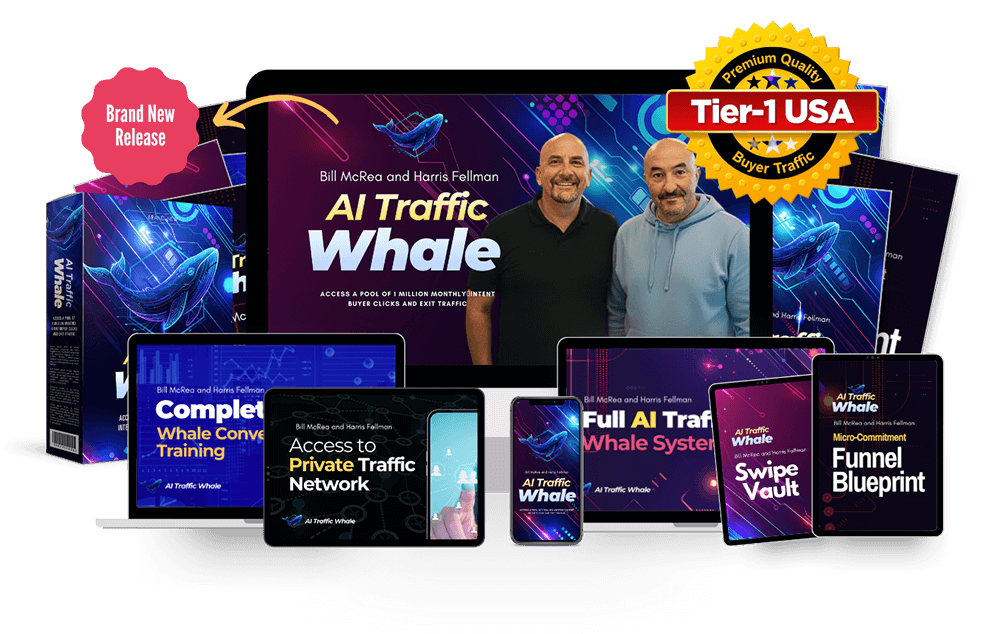
Who Build the AI traffic whale

Spent decades buying, managing, and delivering traffic
Run traffic brokerages and AI-driven traffic networks
Delivered tens of millions of clicks to marketers
Built multiple 7-figure businesses on the back of reliable traffic
We’ve seen every flavor of fake promise and overhyped traffic scam you can imagine.
So instead of creating another “how to get traffic” course, we built what we wish existed when we started
A system that already has the traffic,
already has the AI buyer-intent detection and hands it to you with the funnel & training to turn it into money.
- Funnels and Scalable Online Growth
- Who Build the AI traffic whale
- What Is AI Traffic Whale?
- The Core Problem Tries to Solve
- How AI Traffic Whale Works
- Buyer-Intent Traffic Explained
- Who Is It Designed For
- Who Is It NOT Designed For
- Pricing Model
- Traffic Ownership vs Dependency
- How AI Traffic Whale Fits Into a Long-Term Strategy
- Common Mistakes to Avoid
- Realistic Expectations for Results
- Ethical Disclosure and Transparency
- Final Perspective: What AI Traffic Whale Really Is
What Is AI Traffic Whale?
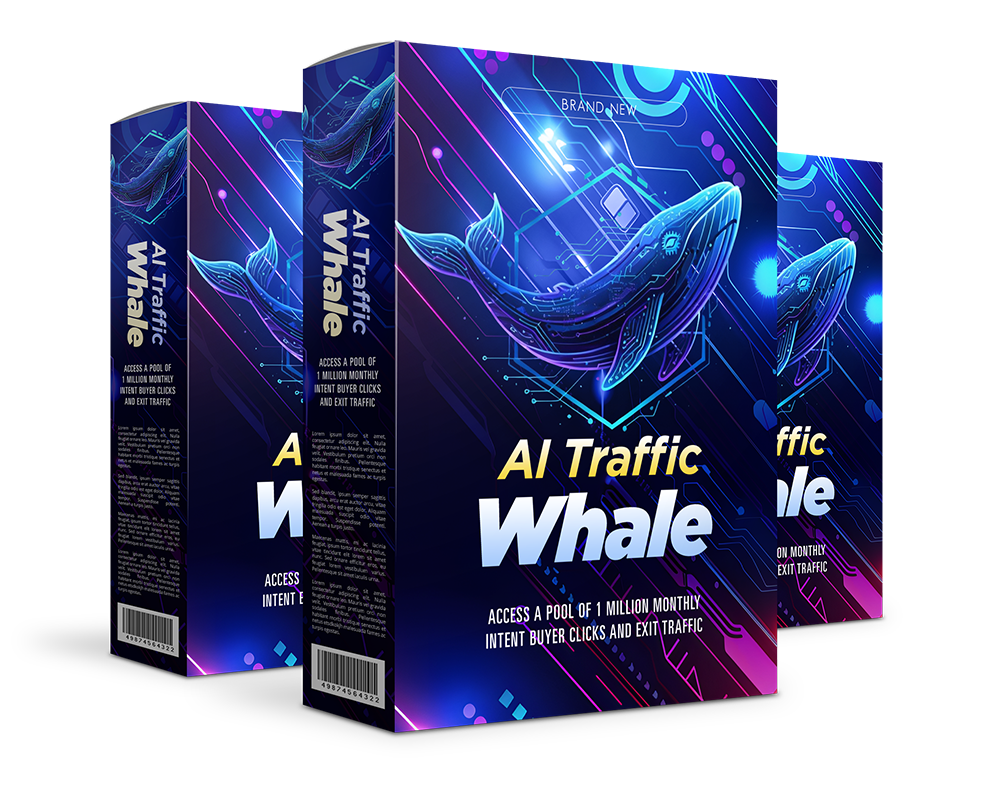
Is a buyer-intent traffic ecosystem designed to help online marketers access filtered traffic and convert that traffic using structured funnels and follow-up systems.
Unlike traditional traffic courses that teach theory combine
- Direct access to traffic
- AI-based intent filtering
- Funnel and bridge-page frameworks
- Tracking and optimization tools
The goal is not just to send clicks but to help you build repeatable traffic-to-asset workflows, where traffic is converted into email subscribers and long-term monetization opportunities.
Is best understood as a traffic accelerator, not a standalone business model.
The Core Problem Tries to Solve
Most marketers struggle with one or more of the following:
- They cannot generate consistent traffic
- They rely on low-quality solo ads
- They lack paid ads experience
- They get clicks but no conversions
- They have no data to optimize with
Targets this problem by shortening the time between idea → traffic → data → sales.
Instead of spending months learning traffic platforms or waiting for organic growth, you can test offers, funnels, and messaging quickly using filtered traffic.
This speed is where the real value lies.
How AI Traffic Whale Works
Operates through a multi-layered system:
1. Traffic Sourcing
Traffic is sourced from large mainstream websites, often at exit or transition points where you are already active online.
2. Buyer-Intent Filtering
AI-based filtering is used to identify you with a higher likelihood of commercial or monetization interest. This helps reduce purely random traffic.
3. Funnel Routing
Traffic is directed to bridge pages or opt-in funnels rather than directly to offers. This step filters traffic further and prepares visitors for follow-up.
4. Tracking and Optimization
You track clicks, opt-ins, and engagement to identify what is working and what needs improvement.
The system is designed to encourage data-driven decision-making, not blind spending.
Buyer-Intent Traffic Explained
Buyer-intent traffic does not mean guaranteed buyers.
It means the traffic is more likely to engage with offers related to business, income, tools, or solutions compared to generic traffic sources.
This matters because:
- Higher intent improves opt-in rates
- Cleaner data makes optimization easier
- Fewer clicks are wasted
- Learning happens faster
Positions its traffic as buyer-intent filtered, which can be valuable when paired with proper funnels and follow-up.
Who Is It Designed For
Most suitable for:
- Affiliate marketers promoting digital products or services
- Coaches and consultants building email lists
- Digital product creators testing offers
- Marketers who want traffic without mastering paid ads immediately
- Intermediate users who want faster validation of funnels
It is particularly useful for people who understand that traffic is a tool, not a shortcut.
Who Is It NOT Designed For
Not ideal for:
- People expecting guaranteed profits
- You with no offer or funnel
- Those unwilling to build an email list
- Anyone looking for passive income without effort
- Marketers who refuse to test and optimize
Traffic amplifies systems. If the system is weak, results will be weak.
Pricing Model
Uses a modular pricing structure that typically includes:
- Core platform access
- Optional traffic packages (various volumes)
- Add-ons for tracking or retargeting
- Community and coaching options
- DIY and Done-For-You upgrades
This structure allows you to control risk by starting small and scaling only when data supports it.
Traffic Ownership vs Dependency
One of the most important concepts to understand is ownership.
With :
- You own your funnels
- You own your email lists
- You own your offers
You do not own:
- The traffic source
- The delivery infrastructure
- The filtering system
This is normal for third-party traffic platforms. The key is to use the traffic to build assets you control, not permanent dependency.
How AI Traffic Whale Fits Into a Long-Term Strategy
Works best when combined with:
- Email marketing
- Offer testing
- Funnel optimization
- Retargeting
- Eventually, organic traffic or ads
Many successful users treat it as a front-end accelerator, using traffic to validate ideas quickly, then reinvesting into scalable systems. They have gotten more than 750 users in just 1 month of launch.
Common Mistakes to Avoid
The most common reasons people could fail will be
- Sending traffic directly to offers
- Skipping email follow-up
- Expecting instant profits
- Ignoring tracking data
- Promoting weak offers
Avoiding these mistakes dramatically improves outcomes.
Realistic Expectations for Results
Does not remove work, but it removes waiting.
A realistic outcome looks like this:
- Early data, not instant profits
- Gradual improvement through testing
- Clear insight into what converts
- Faster learning curves
This is why experienced marketers value traffic systems differently than beginners.
✅ Pros
- Delivers buyer-intent focused traffic, not random clicks
- Traffic can start within 24–48 hours
- Encourages use of funnels and email list building
- Flexible pricing lets users start small and scale
- Sold via WarriorPlus with refund protection
❌ Cons
- No guaranteed sales or ROI
- Requires funnels, follow-up, and optimization skills
- Traffic source is not owned by the user. (You can build your own email list vai optin page)
- No publicly verified conversion or EPC data
- Launch-style marketing with upsells may feel aggressive
Bottom Line
AI Traffic Whale is useful as a traffic testing and list-building tool, not a passive income system. It works best for marketers who understand funnels and treat traffic as data, not a shortcut.
Ethical Disclosure and Transparency
This page may include affiliate links. If you purchase through them, a commission may be earned at no extra cost to you.
This guide is informational and educational. It does not promise income or guarantee results. Outcomes depend on individual effort, strategy, and execution.
Final Perspective: What AI Traffic Whale Really Is
Not a miracle product.
It is a traffic and testing tool built for marketers who want speed, data, and clarity. Used responsibly, it can shorten the path to understanding what works. Used irresponsibly, it becomes just another expense.
The difference is not the platform.
The difference is how you use it.